
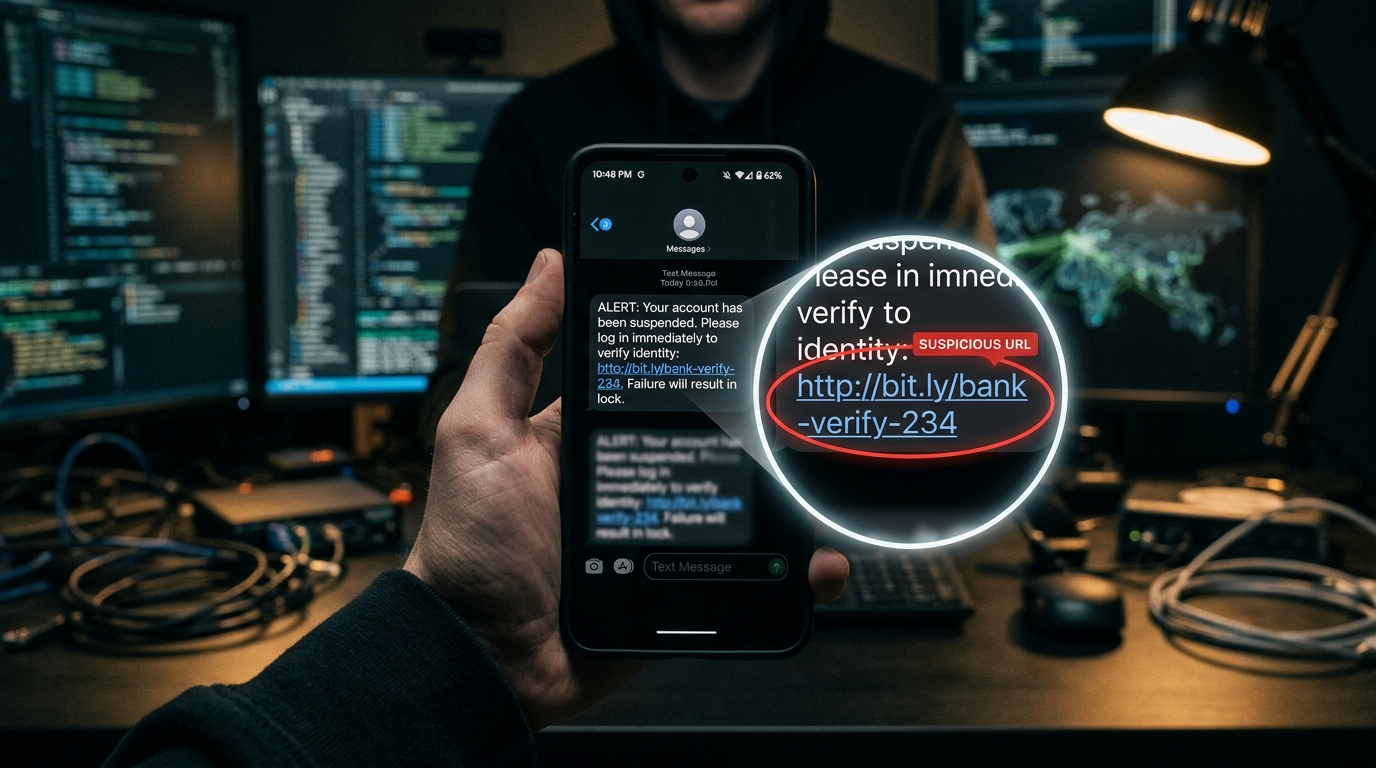
Text message scams—often called “smishing” (SMS phishing)—have become one of the most common ways criminals steal personal and financial information. These fraudulent messages are designed to look like they come from trusted organizations, making it easy to click before thinking.
Common Fake Text Message Scams
Scammers frequently impersonate:
- Banks and credit card companies
- Amazon, Apple, and PayPal
- USPS, UPS, and FedEx
- Toll road agencies
- Cell phone providers
- Government agencies
- Fraud prevention departments
These messages often claim that your account has been locked, a payment has failed, a package couldn’t be delivered, or suspicious activity has been detected. Their goal is to create a sense of urgency so you’ll act without verifying the message.
Warning Signs to Look For
Be suspicious if a text message:
- Creates pressure to act immediately.
- Contains a link asking you to log in or verify your account.
- Requests passwords, one-time verification codes, or personal information.
- Comes from an unfamiliar phone number or email address.
- Contains spelling or grammatical errors.
- Offers prizes, refunds, or unexpected rewards that seem too good to be true.
Even if a message looks professional or includes a company logo, it may still be fraudulent.
What You Should Do
If you receive a suspicious text:
- Pause before responding.
- Visit the company’s website by typing the address directly into your browser or opening the company’s official app.
- Call the organization using a phone number from its official website or the back of your credit or debit card.
- Delete the message if it is clearly fraudulent.
- Report spam texts through your phone’s reporting feature or forward them to 7726 (SPAM) if supported by your mobile carrier.
What You Should NOT Do
Never:
- Click links in unexpected text messages.
- Reply to suspicious texts—even responding “STOP” can confirm your number is active to scammers.
- Share passwords, security codes, Social Security numbers, or banking information through text.
- Install apps or software from links sent in unsolicited messages.
- Send money or gift cards because of instructions received by text.
When in Doubt, Verify
A legitimate company won’t mind if you take a few minutes to verify a request through its official website or customer service number. Taking that extra step can protect your identity, your finances, and your personal information.
A healthy dose of skepticism is one of the best defenses against today’s increasingly sophisticated text message scams.


