
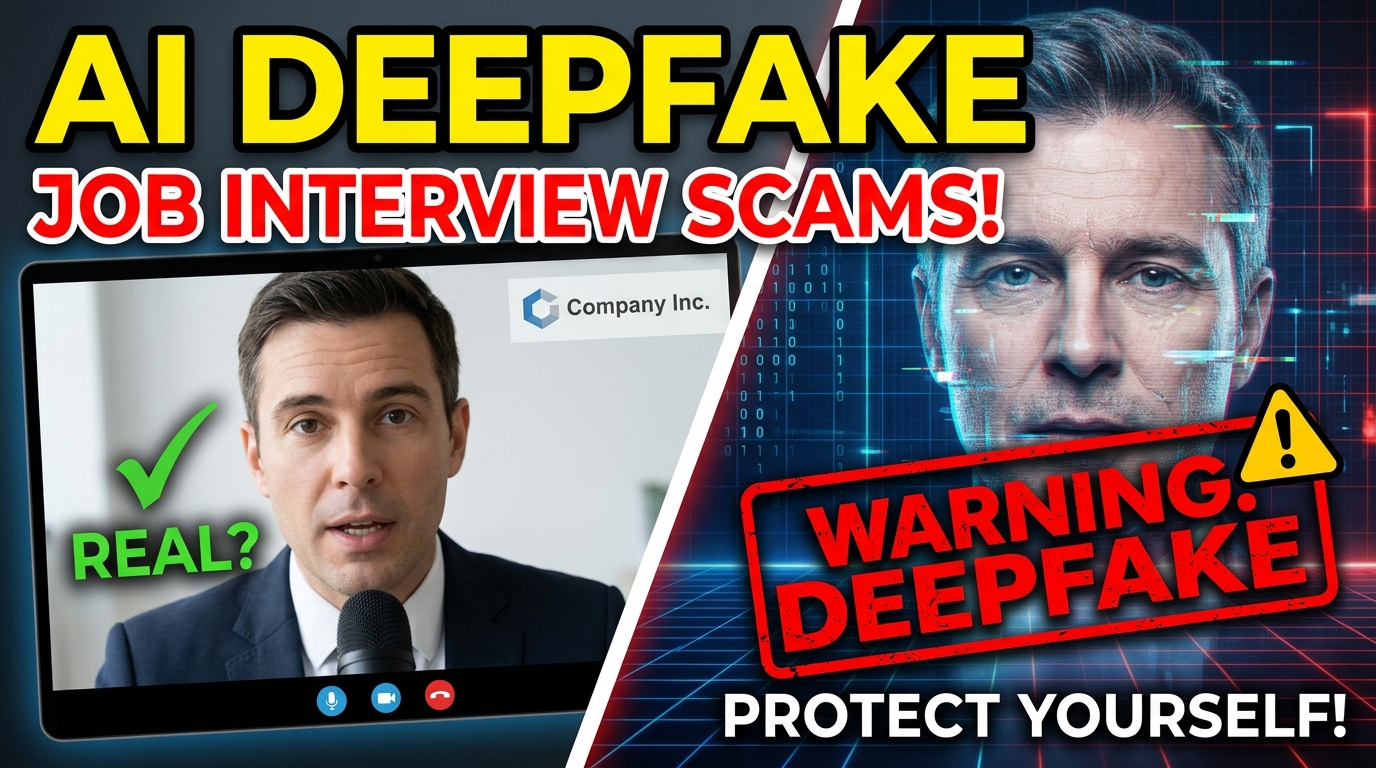
AI Deepfake Job Interviews:
How Scammers Are Creating Entire Fake Hiring Processes
Looking for a new job has always required a little caution. But thanks to artificial intelligence, scammers are taking employment fraud to a whole new level.
Today’s job scams don’t just consist of a fake email asking for your Social Security number. Some criminals are now building entire fake companies, complete with professional websites, realistic recruiters, AI-generated video interviews, offer letters, onboarding paperwork, and even employee handbooks. To many victims, everything looks completely legitimate—until they realize the company never existed.
How the Scam Works
It usually starts with what appears to be a real job posting on a popular employment website or LinkedIn.
After you apply, you’re contacted by a recruiter using a professional email address that closely resembles a legitimate company’s domain. The recruiter schedules interviews, sends polished documents, and keeps communication professional throughout the process.
In some cases, scammers are even using AI-generated video or voice technology to impersonate hiring managers or company executives during video interviews, making the experience feel even more authentic. As deepfake technology becomes cheaper and easier to use, these fake interviews are becoming increasingly convincing.
After several rounds of interviews, you receive the news you’ve been hoping for:
“Congratulations! We’d like to offer you the position.”
That’s when the scam begins.
The Catch
Once you’ve accepted the job offer, the “company” asks you to:
- Purchase your own computer or office equipment from an approved vendor.
- Pay for a background check or certification.
- Deposit money that will supposedly be reimbursed on your first paycheck.
- Provide your Social Security number, driver’s license, banking information, or copies of identification before employment is finalized.
Some victims are even sent fake checks to purchase equipment. After they spend the money, the check eventually bounces, leaving them responsible for the loss.
Others never lose money directly—but instead become victims of identity theft after providing sensitive personal information. The FBI has warned that fake employers often request the same information as legitimate companies, making these scams especially difficult to recognize.
Why These Scams Are So Convincing
Artificial intelligence has dramatically lowered the barrier for scammers.
Today they can generate:
- Professional company websites
- Realistic recruiter emails
- AI-written job descriptions
- Deepfake video interviews
- AI voice cloning
- Fake employee profiles
- Complete onboarding documents
The result is a hiring process that feels remarkably genuine.
Rather than spotting obvious spelling mistakes or suspicious emails, victims now encounter polished, well-organized operations that closely mimic legitimate businesses.
Red Flags to Watch For
Even sophisticated scams usually leave clues.
Be cautious if you notice any of the following:
- The recruiter contacts you unexpectedly about a job you never applied for.
- The company’s website looks new or has very little online history.
- The email address is similar to, but not exactly, the company’s official domain.
- Interviews take place only through messaging apps or unusual video platforms.
- You’re hired unusually quickly with little screening.
- You’re asked to pay for equipment, software, training, or background checks.
- You’re instructed to purchase equipment from a specific vendor.
- You’re asked for banking information or identity documents before you’ve verified the employer.
- The company pressures you to act immediately.
How to Protect Yourself
Before accepting any remote position:
- Verify the company’s website independently instead of clicking links provided by the recruiter.
- Search for the position on the company’s official careers page.
- Call the company using a publicly listed phone number to confirm the recruiter works there.
- Research the recruiter on LinkedIn and verify their employment history.
- Never pay money to get a job. Legitimate employers pay you—not the other way around.
- If something feels rushed or unusually perfect, slow down and verify everything.
Final Thoughts
AI is transforming the hiring process for legitimate employers—but it’s also giving scammers powerful new tools to deceive job seekers.
The safest approach is simple: verify before you trust.
A few minutes spent confirming that a company, recruiter, and job opening are real could save you thousands of dollars—and prevent your personal information from ending up in the hands of criminals.


