
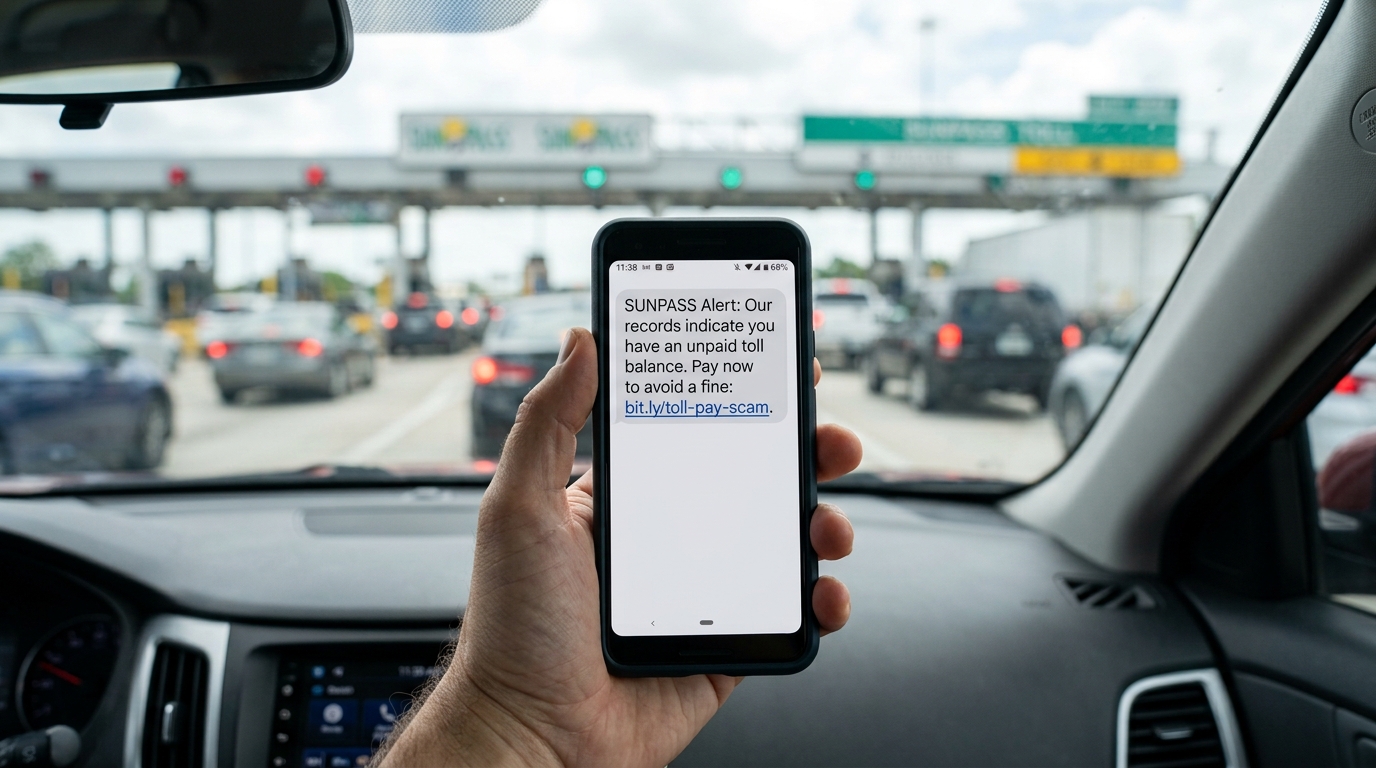
You’re sitting on the couch, your phone buzzes, and there’s a text from the DMV saying you owe $4.85 for an unpaid toll or ticket. If you don’t pay immediately, you’ll be charged late fees or your license may be suspended…or worse.
It looks official. The amount is small. Paying it would only take a minute.
That’s exactly what scammers are counting on.
Over the past year, fake toll payment texts have exploded across the country. They’re being sent to millions of people, including many who haven’t even driven on a toll road recently. The goal is simple: get you to click a link and hand over your credit card information or other personal details.
Why So Many People Fall for It
These scams are surprisingly convincing.
Most of us have driven through a toll plaza or used an electronic toll system at some point. Maybe you forgot about a parking ticket? Maybe you drove a rental car. Maybe you just don’t remember.
When the text says you owe $6.25, it’s easy to think, “Maybe I did miss one.”
The scammers know that a small amount feels believable. Most people aren’t going to spend 20 minutes investigating a $5 charge—they’ll just pay it to make it go away.
The Biggest Warning Sign
The biggest red flag isn’t the amount.
It’s the text itself.
Legitimate toll agencies generally don’t send random text messages demanding immediate payment through a link. If there’s actually an issue with your account, you can always verify it by opening the agency’s official app or typing its website address into your browser yourself.
Never trust the link that comes in the text.
What the Scam Looks Like
Most of these messages follow the same formula:
“Final Notice: Your unpaid toll balance is $7.15. Pay today to avoid additional penalties.”
The message usually includes a link that looks almost legitimate. At first glance it may resemble a real toll authority’s website, but there are often subtle differences—a misspelled word, extra characters, or a strange web address you’ve never seen before.
Once you click, you’re taken to a fake payment page that asks for your credit card information and sometimes your address, phone number, driver’s license, or other personal information.
None of that information goes to a toll agency.
It goes straight to scammers.
If You Get One of These Texts
The safest response is also the easiest:
- Don’t click the link.
- Don’t reply to the message.
- Delete it or mark it as spam.
- If you’re genuinely concerned, visit your toll agency’s official website or app and check your account there.
It only takes a minute, and you’ll know you’re looking at the real thing.
Already Clicked?
Don’t panic.
If you entered your payment information, contact your bank or credit card company as soon as possible. They can monitor your account, block fraudulent charges, and issue a replacement card if necessary.
If you entered personal information such as your driver’s license number or account passwords, consider changing those passwords immediately and keep an eye on your credit and financial accounts for unusual activity.
A Good Rule to Remember
Whenever you receive a text asking you to pay a bill, slow down before you tap.
Whether it’s an unpaid toll, a package delivery fee, a parking ticket, or a warning that one of your accounts has been locked, take a minute to verify it yourself.
Go directly to the company’s website. Use their official app. Call the customer service number you already know is legitimate.
Scammers are getting better at making fake messages look real, but they’re still relying on one thing: getting you to act before you think.
A few extra seconds of caution can save you from a stolen credit card, a compromised identity, and a lot of unnecessary stress.


